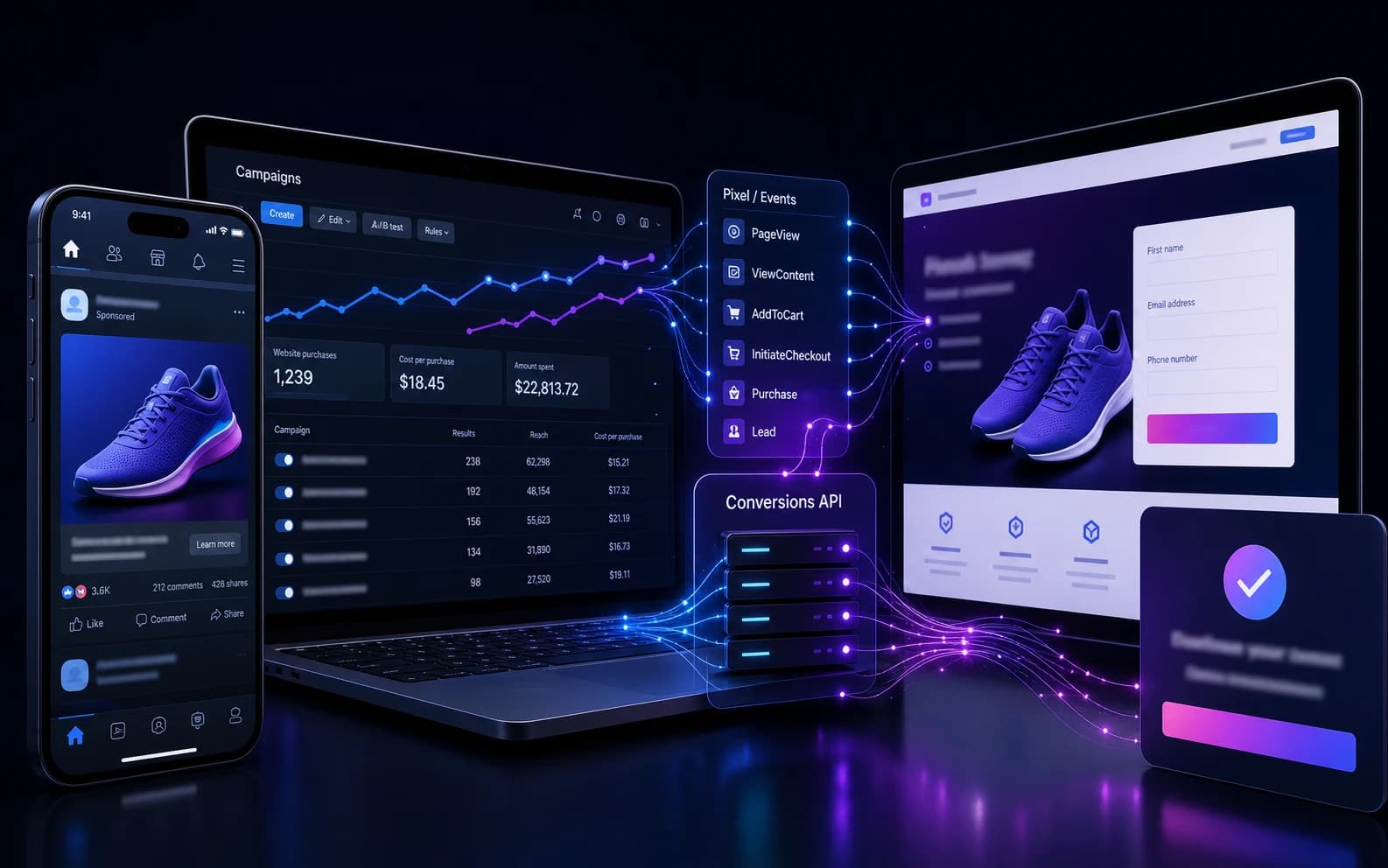
Search traffic expresses a need; social traffic is usually interrupted by a relevant idea. That means the Meta ad, landing page and follow-up must work as one narrative rather than three disconnected assets.
The page should confirm the creative immediately, explain why the offer matters now and create enough trust for a person who may not know the brand.
Key takeaways
- Same promise and visual cues
- One primary action
- Clear audience relevance
- No surprise conditions
01
Continue the creative instead of restarting the pitch
Use the same core visual, promise, audience language and offer on the first screen. If the ad promises a guide, consultation or specific product, the page must show that exact item without a detour.
- Same promise and visual cues
- One primary action
- Clear audience relevance
- No surprise conditions
02
Build confidence for a colder audience
Show the mechanism, outcome, real evidence, delivery details and risk-reducing information in a logical sequence. For lead generation, explain what happens after the form and ask only for fields the sales process truly uses.
03
Use Pixel and Conversions API as one measurement system
Browser events provide fast behavioural data, while Conversions API can send server-side events and improve resilience. Deduplicate matching events, respect consent and test event quality before relying on automated optimisation.
- ViewContent and landing views
- Lead, purchase or booking
- Event deduplication
- CRM quality feedback
04
Optimise toward revenue quality, not cheap forms
A low cost per lead can hide poor intent. Connect campaigns to CRM outcomes, compare creative and audience by qualified rate, and feed stronger events back to the platform when the volume and privacy setup allow it.
Trusted references