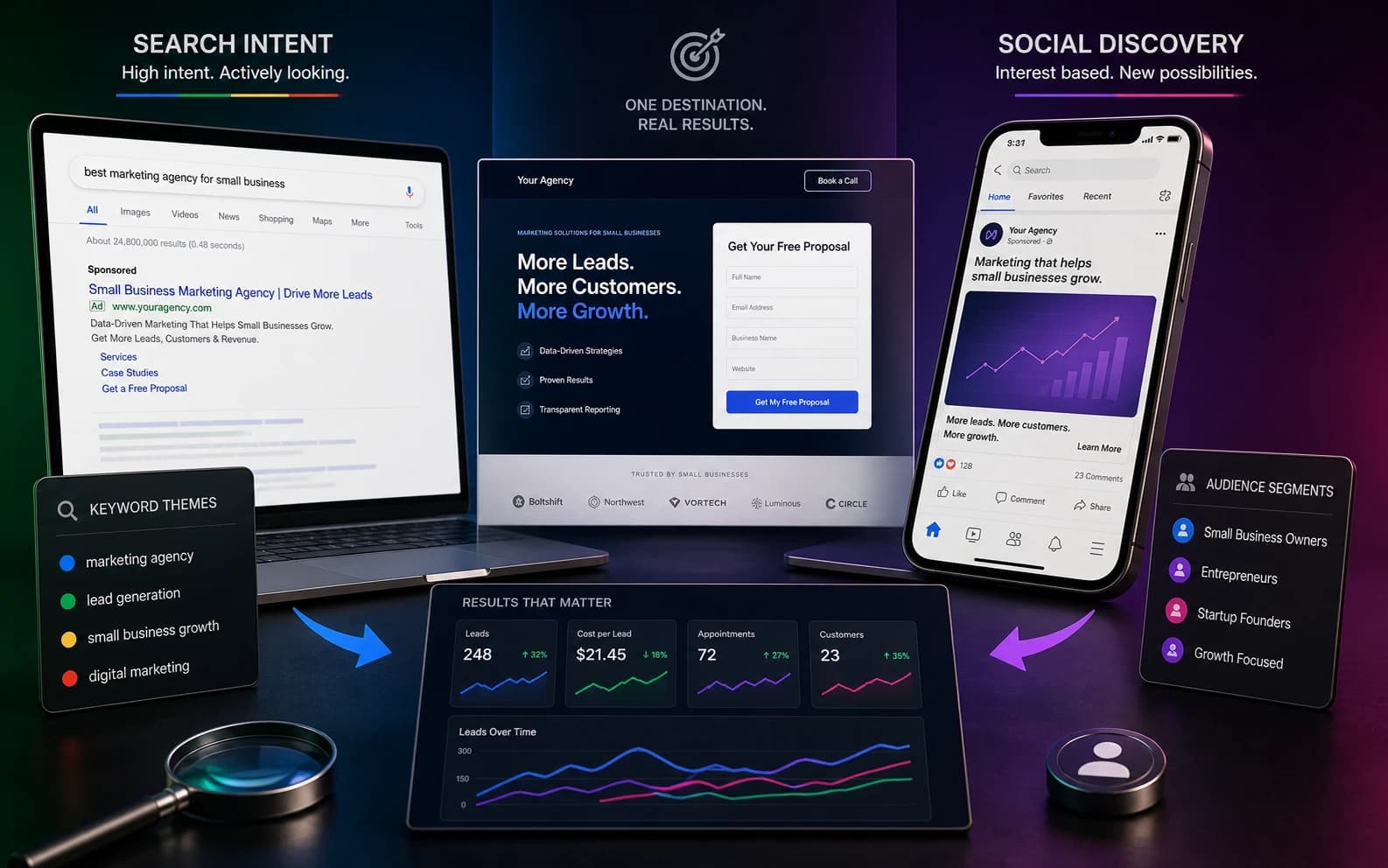
The platforms are not interchangeable. Google usually reaches people who are actively describing a need, while Meta can introduce an offer to a well-defined audience before they search for it.
Choose according to demand, buying cycle, creative strength and measurement capability — then build a landing page that continues the behaviour of that channel.
Key takeaways
- Services people actively search for
- High-intent local demand
- Clear commercial keywords
- Fast lead response
01
Google Ads is strongest when demand already exists
Search campaigns are useful for urgent, local or clearly named needs. Keyword and location control can be precise, but competitive clicks require a relevant page, strong economics and reliable conversion tracking.
- Services people actively search for
- High-intent local demand
- Clear commercial keywords
- Fast lead response
02
Meta Ads is strongest when creative can create interest
Meta can demonstrate a product, show transformation or reach a niche audience based on signals and content engagement. Success depends heavily on creative volume, an understandable offer and a page that builds trust from a colder start.
03
Compare customer economics, not platform averages
Estimate gross profit, close rate, repeat value and acceptable acquisition cost. A cheaper click is not better if it creates weak leads; a more expensive lead can be profitable when intent and sales follow-up are stronger.
- Cost per qualified lead
- Lead-to-sale rate
- Customer acquisition cost
- Payback and lifetime value
04
Use one channel to learn before splitting a small budget
Start where the strongest evidence exists, track the whole funnel and run enough volume to learn. Add the second platform when the first journey is understood; then use search, social and remarketing as complementary roles.
Trusted references