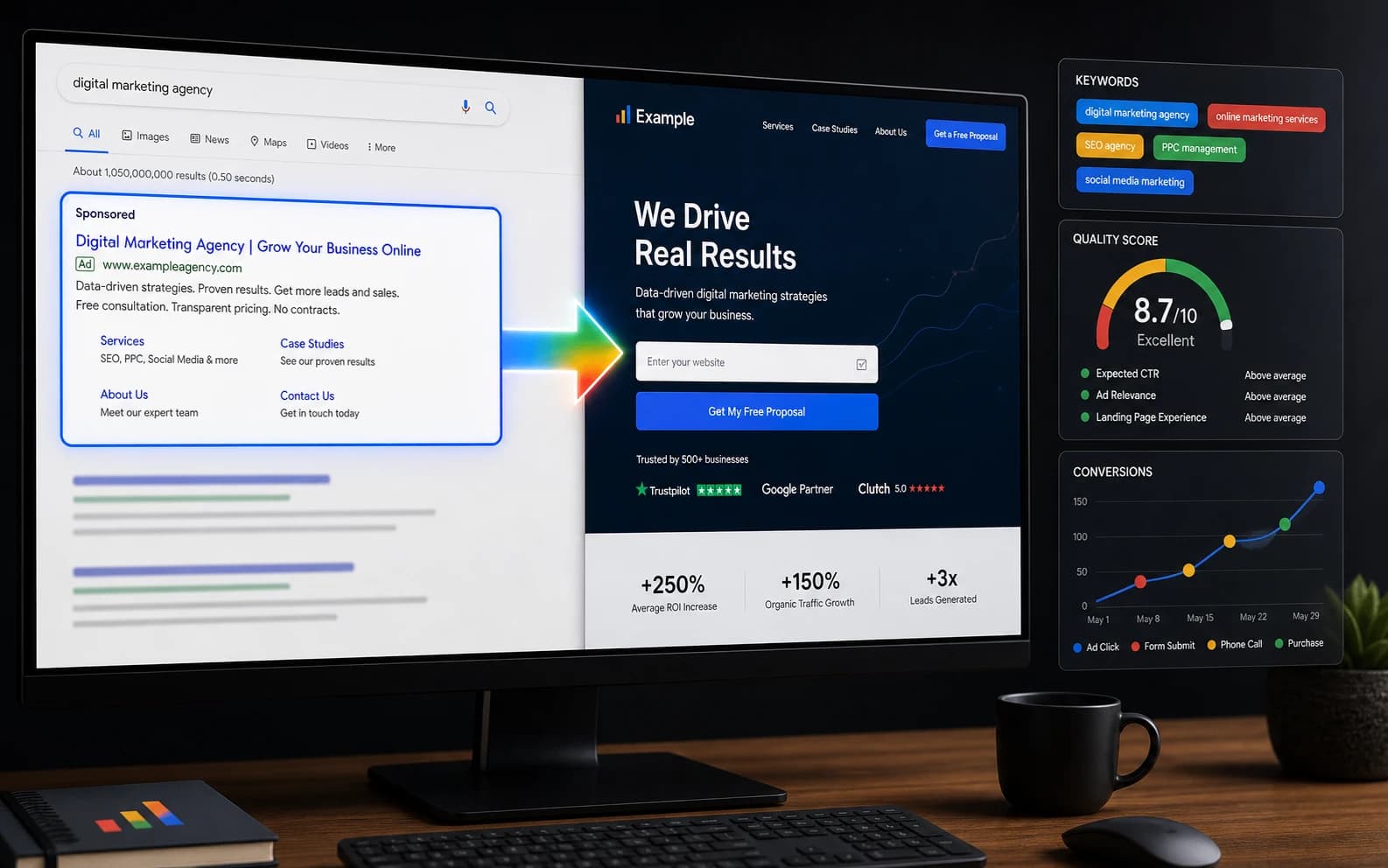
A paid click arrives with a specific expectation. If the landing page changes the language, hides the promised offer or asks the visitor to search again, the campaign pays for confusion.
Google’s own guidance emphasises relevance, useful original content, mobile friendliness, transparent information and an easy path to action. Build those principles into the page before increasing spend.
Key takeaways
- One intent per page
- Visible promise above the fold
- Proof relevant to the query
- CTA that matches the ad
01
Match keyword, ad and landing-page promise
Group ads by a real customer need and send each group to the closest relevant page. Repeat the outcome and context naturally in the headline, proof and CTA; do not send specific ads to a generic homepage.
- One intent per page
- Visible promise above the fold
- Proof relevant to the query
- CTA that matches the ad
02
Make the mobile decision fast and obvious
Use a fast first screen, readable type, short forms and tap-friendly controls. Explain the offer before requesting data, keep important proof close to the decision and remove navigation that does not help the campaign goal.
03
Track meaningful conversions, not button clicks
Configure the Google tag or an appropriate analytics setup, test form success and call events, and distinguish qualified outcomes from micro-actions. Use consistent campaign parameters and verify data before making bidding decisions.
- Form success events
- Qualified phone calls
- Booked appointments or purchases
- Consent-aware measurement
04
Test the largest uncertainty first
Start with offer, audience-message match, proof and form friction before testing decorative details. Run one meaningful hypothesis at a time and judge it with conversion quality, volume and cost — not just click-through rate.
Trusted references