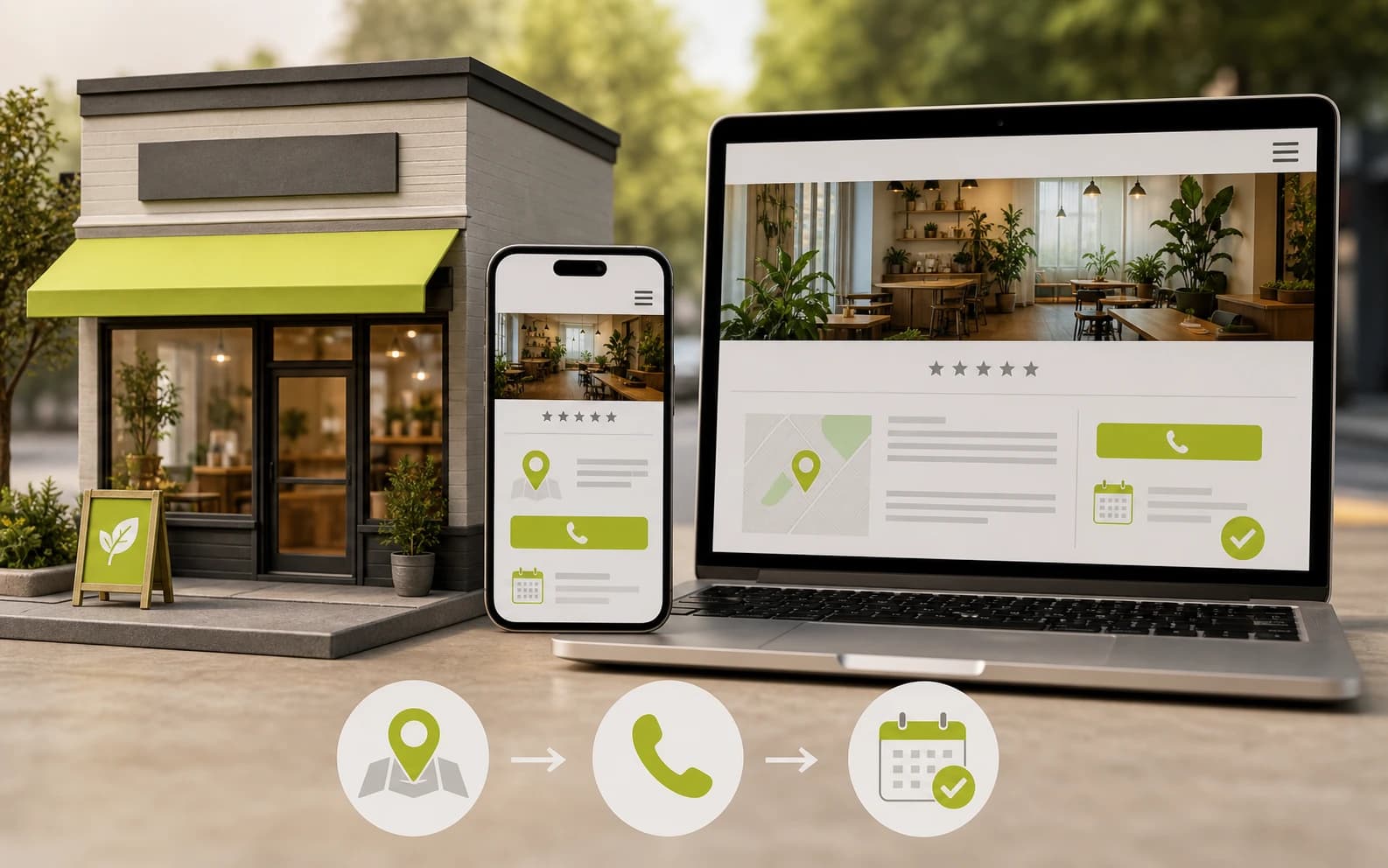
A useful small business website answers the questions that stop a customer from calling: what exactly do you offer, is it right for me, can I trust you, how much should I expect and what happens next?
Start with the shortest structure that answers those questions well. Invest in real proof, mobile speed and local discoverability before decorative features that do not improve a decision.
Key takeaways
- Homepage with a clear promise
- Core service pages
- Reviews and real work
- Contact, location and opening details
01
Build one strong page for each customer intention
Most small firms need a precise homepage, dedicated pages for core services, proof or reviews, an honest about page and a frictionless contact route. Location pages are useful only when each one contains genuinely local information.
- Homepage with a clear promise
- Core service pages
- Reviews and real work
- Contact, location and opening details
02
Use evidence that only your business can provide
Show real projects, products, premises, process, qualifications and customer outcomes. Generic stock copy makes a small company look interchangeable; specific evidence explains why a local buyer should choose you.
03
Connect the website with local search
Keep business name, address, phone, categories and hours accurate across the site and Google Business Profile. Create service content around how customers search, earn reviews naturally and make calling or directions effortless on mobile.
- Consistent business information
- Complete Business Profile
- Local service language
- Fast mobile contact actions
04
Spend first on the parts that create confidence
Prioritise strategy, useful copy, responsive design, performance, analytics and reliable forms. A phased plan can launch the core buying journey first and add case studies, languages, booking or automation after real demand is measured.
Trusted references