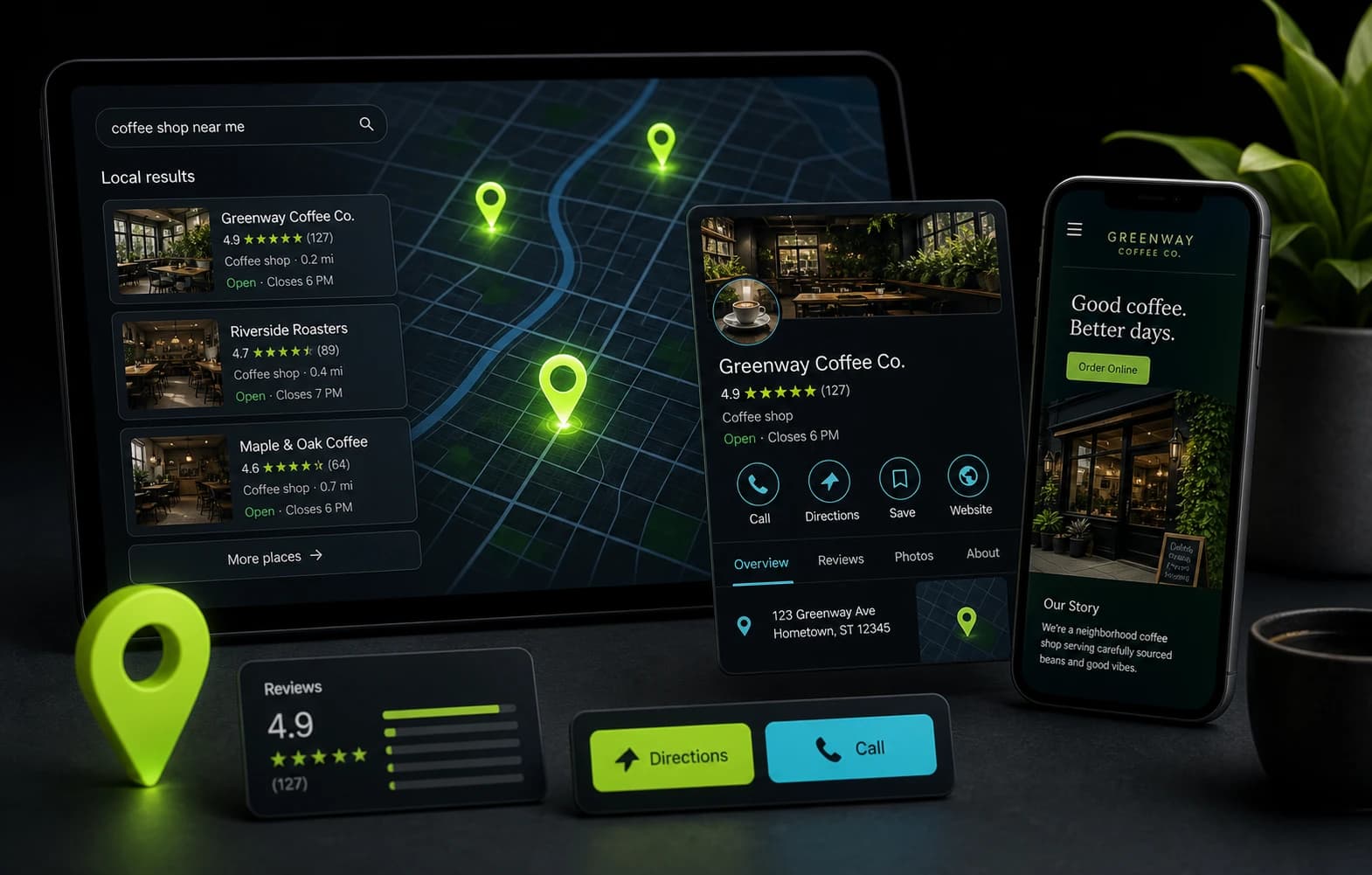
Local customers often decide from a map result, review, service page and phone action within minutes. Your website must reinforce the same facts and make that decision easy on a small screen.
Google describes local ranking mainly through relevance, distance and prominence. You cannot change every factor, but you can make the business easier to understand, trust and contact.
Key takeaways
- Accurate categories and services
- Current hours and contact details
- Useful real photos
- Consistent review responses
01
Complete and maintain the Business Profile
Use the correct primary category, accurate address or service area, hours, phone, services, photos and website link. Update exceptional hours and respond to reviews so customers receive current information.
- Accurate categories and services
- Current hours and contact details
- Useful real photos
- Consistent review responses
02
Build local service pages with real substance
Explain what is available, where it is delivered, typical questions, process and local proof. Avoid duplicating the same paragraph across dozens of city pages; each location page should help a customer in that place.
03
Keep identity and technical signals consistent
Use the same business name, address and phone across important directories and the website. Add LocalBusiness structured data where accurate, clear contact links, crawlable internal links and a mobile experience that loads quickly.
- Consistent NAP information
- LocalBusiness schema
- Directions and click-to-call
- Fast mobile pages
04
Grow prominence through useful work and reputation
Ask real customers for honest reviews without incentives, publish local case studies and earn relevant mentions from partners, associations and community sources. Reputation cannot be manufactured sustainably; it must reflect service quality.
Trusted references